Checquy—Camp Caius
The RookThe Checquy’s connection to Camp Caius is a concealed breach within its own system: funds taken from the organization financed a second, unauthorized Estate for training children and surgically instilling abilities. The discovery made Camp Caius more than a rogue school. It suggested that someone had built an illegal reserve of potential operatives outside the institution’s visible chain of command, while leaving the identity of the project’s ultimate authority unresolved.
A second Estate financed in secret
The connection came to light through financial irregularities. By following the missing money through Checquy accounts, Myfanwy found that the diverted sum, though not large beside the organization’s full budget, was enough to purchase land in south Wales, erect buildings and establish a small army of children with abilities. The money trail thus led not to an isolated act of embezzlement but to a parallel institution: there was a second Estate.
That duplication mattered because the original Estate represented the core of the Checquy’s operational power. Its importance lay not only in the supernatural abilities of its agents, but in bringing them into the organization young and training them rigorously. In Myfanwy’s assessment, this system was a reason the Checquy remained powerful and kept supernatural dangers from entering ordinary life. A second training site therefore meant that whoever controlled it possessed a major weapon outside authorized oversight.
Myfanwy also recognized how difficult the scheme would be to establish without access to the organization’s highest powers. Setting up a training operation required financial access, the procurement of children and the ability to direct a project across several fields. She could imagine no one below the Court possessing that combination of control. Yet she found no Court member named in the records, only reports forwarded to an unidentified Founder. The administrative trail confirmed the enterprise’s duration and expense while concealing who had made it possible.
Camp Caius and its methods
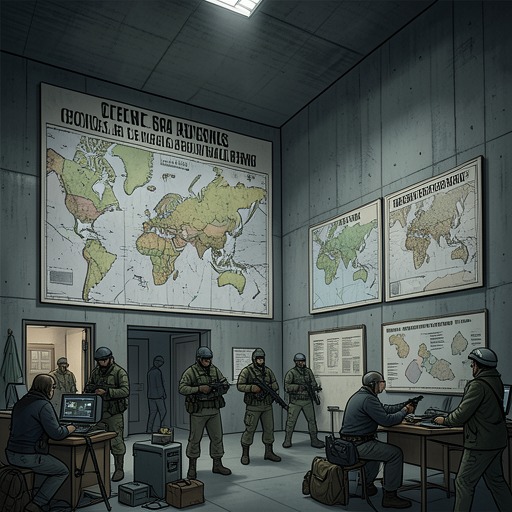
The installation was identified in memoranda as Camp Caius. Its earliest available records reached back twenty years, and the financial statements confirmed that the missing Checquy money had been routed there. A substantial share went to training fees and surgical facilities. The teachers were paid more than staff at the real Estate, while the surgeons received still higher compensation, even though the premises appeared to be operating on a limited budget.
The school’s security reinforced the impression of a deliberately concealed operation rather than a well-protected Checquy facility. Its surveillance was primitive; guards arrived periodically on conspicuous vehicles that students could see coming and hide from. Unlike the established Estate, the site lacked the formidable protection of the woods and had a village nearby. Its primary defense was simply that it was secret. Myfanwy entered through the grounds and reached the offices, where she searched locked filing cabinets and copied the front pages of student files before someone tried the door.
Those records showed a small, unusual student body and a costly, dangerous approach to ability. At the time of Myfanwy’s account, Camp Caius held six girls and eight boys, aged eleven to twenty-two. The students appeared to have no natural powers; instead, they underwent extensive surgery intended to give them abilities. Myfanwy regarded this as radically unlike the Checquy’s usual methods and close to impossible. The children came from different regions and social backgrounds, and her investigation of their families and medical records yielded no clear reason they had been selected.
The available records also made the project’s human cost plain. Students remained at Camp Caius until twenty-three, after which graduates were sent to a place called Albion, whose location and purpose Myfanwy could not establish. Only about fifteen students had graduated in five years, despite fourteen being enrolled at the time. The discrepancy led her to the records of deaths: students died frequently, sometimes in training exercises but more often during surgery. The operation’s investment in instructors and medical facilities was therefore inseparable from the attrition those facilities produced.
Checquy practices and the question of control
Camp Caius stood in an uneasy relation to the Checquy’s own methods of acquiring and training children. Myfanwy’s letter contrasts the secret school’s selection of children from private British families with the Checquy’s established ability to take children into its care. In the Checquy system, some parents were relieved to surrender a child they found difficult to manage; others were pressured or deceived through lies, threats, promises and legal authority. Families could be left believing a child was gravely ill, mentally unwell or contagious, while the government assumed responsibility.
That comparison does not explain why Camp Caius chose its pupils. The school’s students did not share an obvious background, and Myfanwy could find no rationale for taking them rather than orphans, street children or other children who might have been easier to obtain. The contrast instead sharpens the mystery: a project that borrowed the Checquy’s central premise of early training had adopted a distinct and more invasive means of producing power, without an evident selection rule or disclosed sponsor.
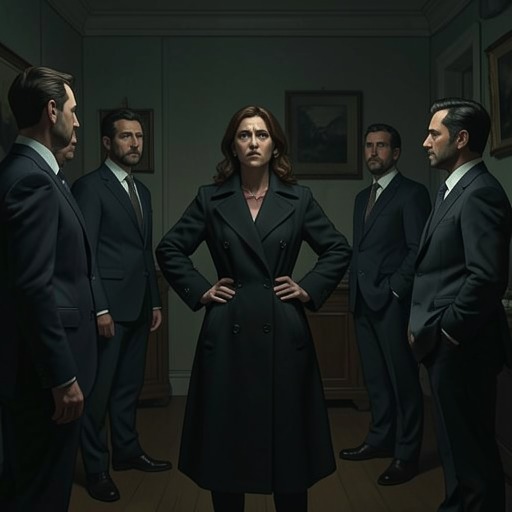
The evidence that its records gave no account of Court involvement did not mean that the operation was institutionally trivial. Myfanwy reasoned that only the eight Court members could combine the control, money and procurement capacity needed to create it. The absence of their names, alongside the repeated designation of an unnamed Founder, made the concealment itself a central feature of the relationship. Camp Caius was funded through the Checquy but insulated from its visible leadership; its connection to the organization was real, while responsibility for it remained obscured.
Discovery and unresolved consequences
Myfanwy’s investigation moved from accounting to physical intrusion. After tracing the money to the Welsh estate, she visited during a weekend, entered the grounds at night and searched the offices. She found financial and student records, copied identifying details and learned enough to establish the scheme’s duration, expenditures, student deaths and opaque reporting structure. But the files did not identify the Founder or reveal what awaited graduates at Albion. Her discovery exposed the enterprise without solving its command structure.
The breach also belonged to a wider crisis of concealed information. After the later revelations about the Grafters and the betrayal within the Checquy, Myfanwy gave an incomplete account of her own recent experiences at a debriefing. She deliberately stayed vague about Norman’s abilities and avoided mention of memory loss, using light-headedness to escape a fuller explanation. This does not establish a direct operational link between Camp Caius and the later betrayal; it does show the conditions under which the discovery circulated, with Myfanwy herself withholding information in an organization where concealed projects and divided trust had become consequential.
Camp Caius’s significance rests on that unresolved double character. It was demonstrably sustained by diverted Checquy funds and built to create trained, altered operatives, yet its Founder remained unnamed and its relationship to the Court unconfirmed. The institution’s secret did not merely hide money; it hid the authority to select children, subject them to surgery and determine what kind of force they would become. In a Checquy whose power depended on training and secrecy, the second Estate revealed that the organization’s own methods could be reproduced—and commandeered—inside its walls without open accountability.